A new patient does not judge your practice only by the adjustment. They judge it by whether they understand what is happening, why you recommend a plan, and what role they play between visits. That is where chiropractic patient education becomes a growth advantage, not a decorative add-on for the waiting room.
When patients leave confused, they delay care, question recommendations, and become vulnerable to a competitor’s message. When they leave with clarity, they are more likely to follow through, refer family members, leave stronger reviews, and see your clinic as the trusted local authority. The difference is not more jargon. It is a better education system built into the patient journey.
Why Chiropractic Patient Education Drives Practice Growth
Most chiropractors already educate patients one-on-one. The problem is consistency. A busy day, a new associate, a shortened report of findings, or a distracted patient can turn a great explanation into an incomplete one. Patients cannot act confidently on what they only half understood.
Education reduces friction at the moments that matter commercially: accepting a care recommendation, keeping appointments, following home guidance, and explaining your value to a spouse or friend. It also makes your marketing more believable. A polished website and a top Google position can earn the first appointment, but the in-office experience determines whether that lead becomes a long-term patient relationship.
This does not mean turning every visit into a lecture. Patients want clear answers, relevant visuals, and practical next steps. They do not need a 10-minute anatomy seminar when their primary question is, “Why does this keep happening?” Your system should answer the question behind the question.
For example, a patient with recurring low back discomfort may need to understand the difference between short-term symptom relief and the factors contributing to recurring stress. A parent bringing in a child may need a plain-language explanation of what the examination involves and what outcomes are realistic. The education must match the patient’s concern, stage of care, and health literacy.
The Gap Between What You Say and What Patients Hear
Clinic owners often assume patients understand more than they do. You may explain a finding clearly, then move to scheduling and payment while the patient is still processing the first sentence. They nod because they are polite, not because they are persuaded.
That gap is costly. A patient who does not understand the purpose of their care plan may view visits as optional. A patient who cannot explain your recommendations at home may face resistance from a decision-making spouse. A patient who sees only treatment, rather than a thoughtful clinical process, is more likely to compare your office on price alone.
The answer is repetition across formats. Say it. Show it. Reinforce it after the visit. The core message should remain consistent whether patients hear it from the doctor, see it on a spine chart, encounter it on a reception-area TV slide, or read it in a follow-up communication.
Consistency is especially important in multi-provider clinics. Your brand promise cannot change depending on who is in the room. Create a shared library of approved explanations, visuals, and talking points so every provider and team member supports the same patient experience.
Build Education Into Each Stage of the Patient Journey
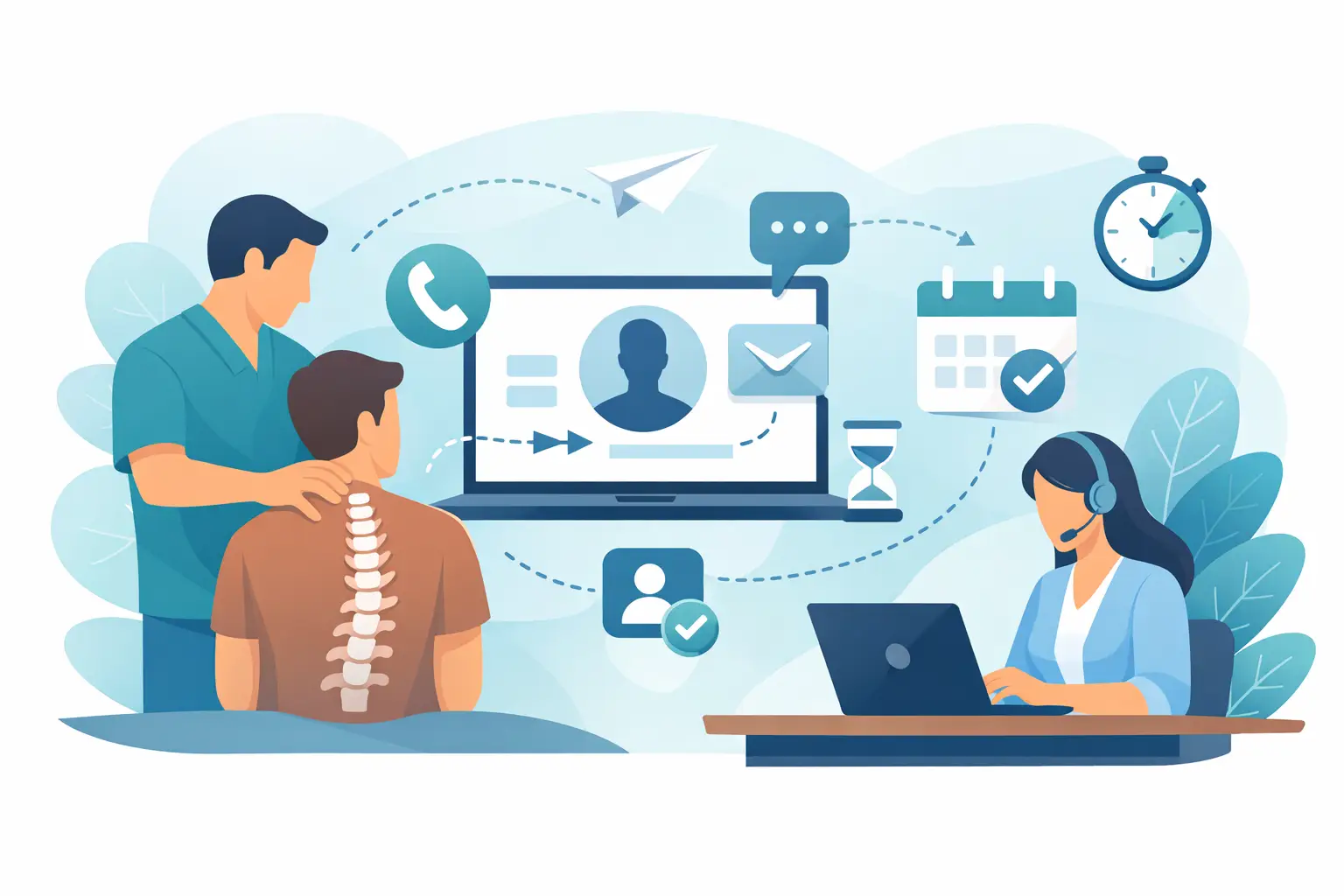
The strongest patient education begins before the adjustment and continues after the patient walks out. Think of it as a conversion path inside your clinic, not a stack of brochures near the front desk.
Before the First Visit: Reduce Anxiety and Set Expectations
New patients often arrive carrying uncertainty. They may be worried about discomfort, skeptical because of something they read online, or unclear about what happens at an initial appointment. Your pre-visit materials should answer the basics without making guarantees: what to bring, what the visit may include, how to prepare questions, and what happens after the exam.
This is also the right place to establish your clinical philosophy. Keep the language patient-centered. Explain that recommendations are based on the individual’s history, examination, goals, and response to care. Avoid sweeping claims. Credibility wins when patients feel informed rather than sold.
During the Visit: Make the Explanation Visual
A report of findings should feel personal, not rehearsed. Use the patient’s stated goal as the anchor. If they want to return to the gym, sleep more comfortably, keep up with their kids, or tolerate a workday with less disruption, connect your explanation to that goal.
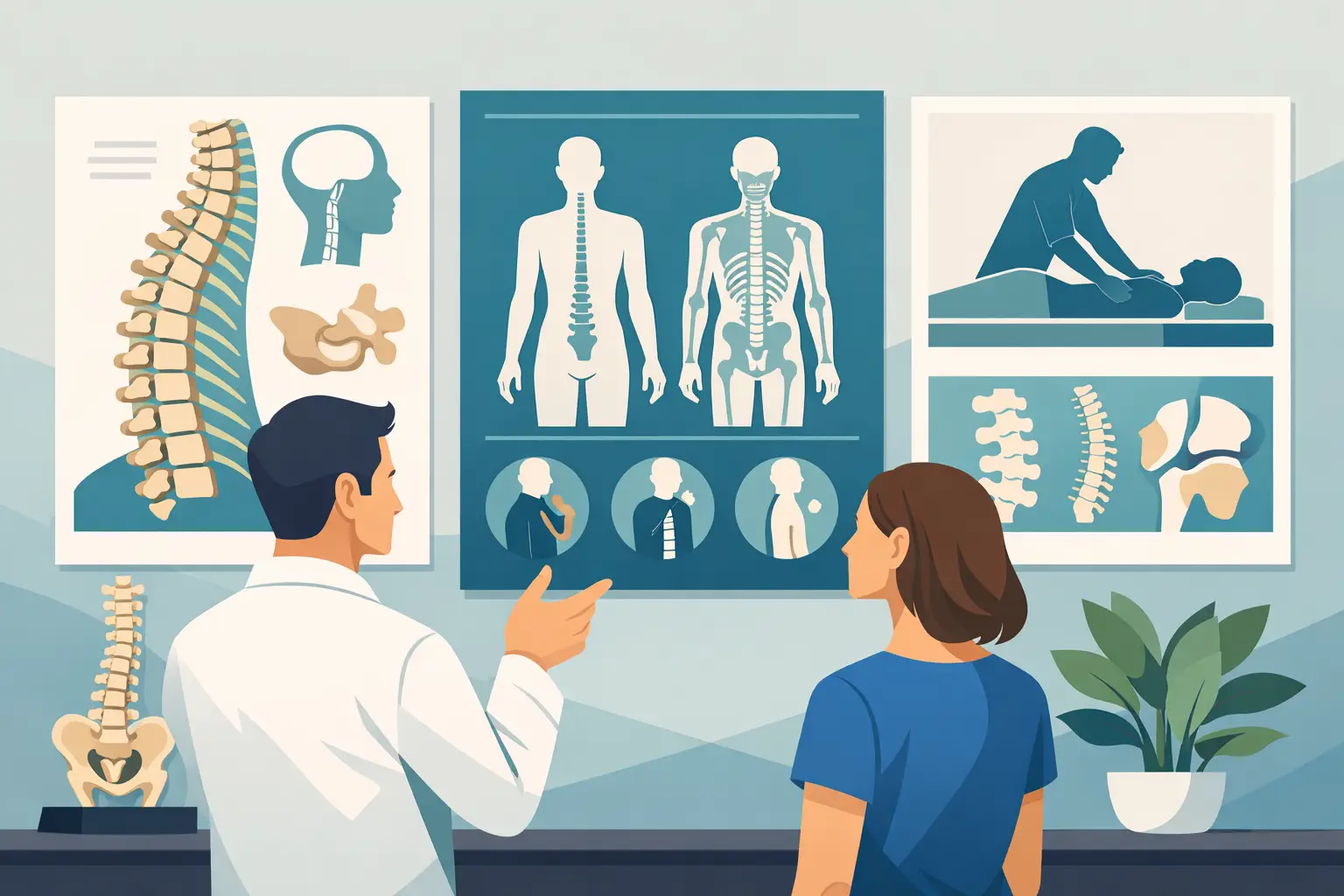
Visual tools are powerful because they help patients retain what spoken explanations cannot. Professionally designed spine charts, condition-specific visuals, models, and digital slides can make anatomy and movement easier to discuss. They also elevate the perceived professionalism of your space. A clinic with generic wall art and outdated handouts communicates something very different from a clinic that looks intentional, current, and clinically organized.
There is a trade-off here. Too many graphics create noise, while overly technical visuals can intimidate patients. Choose materials that are clean, readable from a distance, and consistent with your brand. Your education should clarify, not compete for attention.
Between Visits: Reinforce the Plan Without Overwhelming Patients
The days between appointments are when patients decide whether your recommendations fit into their real lives. A simple reinforcement message can remind them what they are working toward, what to monitor, and when to contact the office with questions.
Keep follow-up education focused. One clear concept per message often performs better than a long list of advice. A patient early in care may benefit from a brief explanation of expected variability in how they feel. A maintenance patient may respond better to content about movement habits, work ergonomics, or staying active. The right message depends on the care plan and the individual patient, so avoid automated communications that sound like they were written for everyone.
Train Your Team to Educate With Confidence
Your front desk team, chiropractic assistants, and providers all influence patient understanding. If the doctor explains a plan one way and the team describes it another way, uncertainty grows fast.
Give staff approved language for common questions about scheduling, exam flow, care-plan logistics, and office policies. They should never diagnose or step outside their role, but they can reinforce the doctor’s explanation and direct patients back to the right conversation. That protects the patient experience while keeping the office efficient.
Role-play the moments where trust is won or lost: a patient hesitating at the desk, a spouse calling with questions, a new patient asking whether they need to commit to care, or someone who missed an appointment and feels embarrassed to return. The goal is not pressure. It is confident, respectful communication that makes the next step easy.
Measure Whether Education Is Actually Working
Do not assume your patient education is effective because the materials look good. Track the behavior it is meant to improve. Look at care-plan acceptance, appointment adherence, cancellation patterns, reactivation, review volume, referrals, and the percentage of new patients who convert after the initial visit.
If acceptance is weak, review whether patients understand the recommendation before they reach the front desk. If no-shows are rising, assess whether expectations were set clearly during the first appointment. If referrals are scarce despite positive outcomes, your patients may value your care but lack the language to describe it to others.
Ask patients directly, too. A brief question such as, “What questions do you still have about your plan?” can reveal more than a generic satisfaction survey. Their answers will show you where your explanation, visuals, or follow-up process needs work.
Make Your Clinic Look as Credible as It Sounds
Patient education is part of your brand environment. Every poster, handout, screen, and point-of-contact either strengthens or weakens your positioning. When your visual materials are inconsistent, dated, or generic, patients notice – even if they cannot articulate why.
A coordinated education system gives your office visual authority. It supports the same positioning your website, local SEO, ads, and social content are building outside the clinic: this is a professional chiropractic practice with a clear process and a commitment to patient understanding. MyChiroPractice helps clinics bring that continuity into the physical office with education materials designed for the chiropractic patient journey.
Your competitors are not waiting for patients to become more informed. They are shaping the conversation now through their websites, reviews, office experience, and follow-up. Build an education system that makes every patient feel clear on what comes next, confident in their decision, and comfortable recommending your practice before they even leave the parking lot.