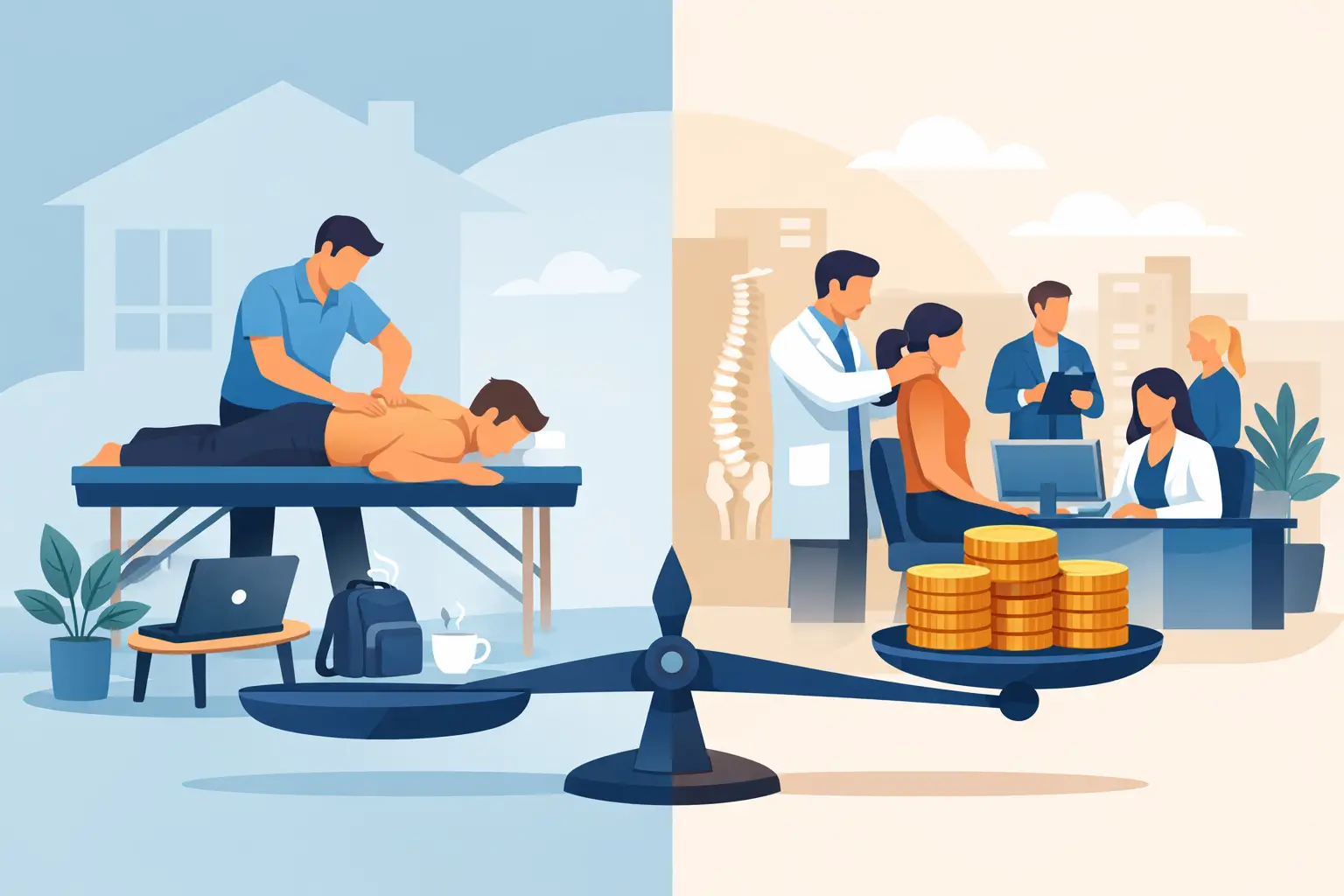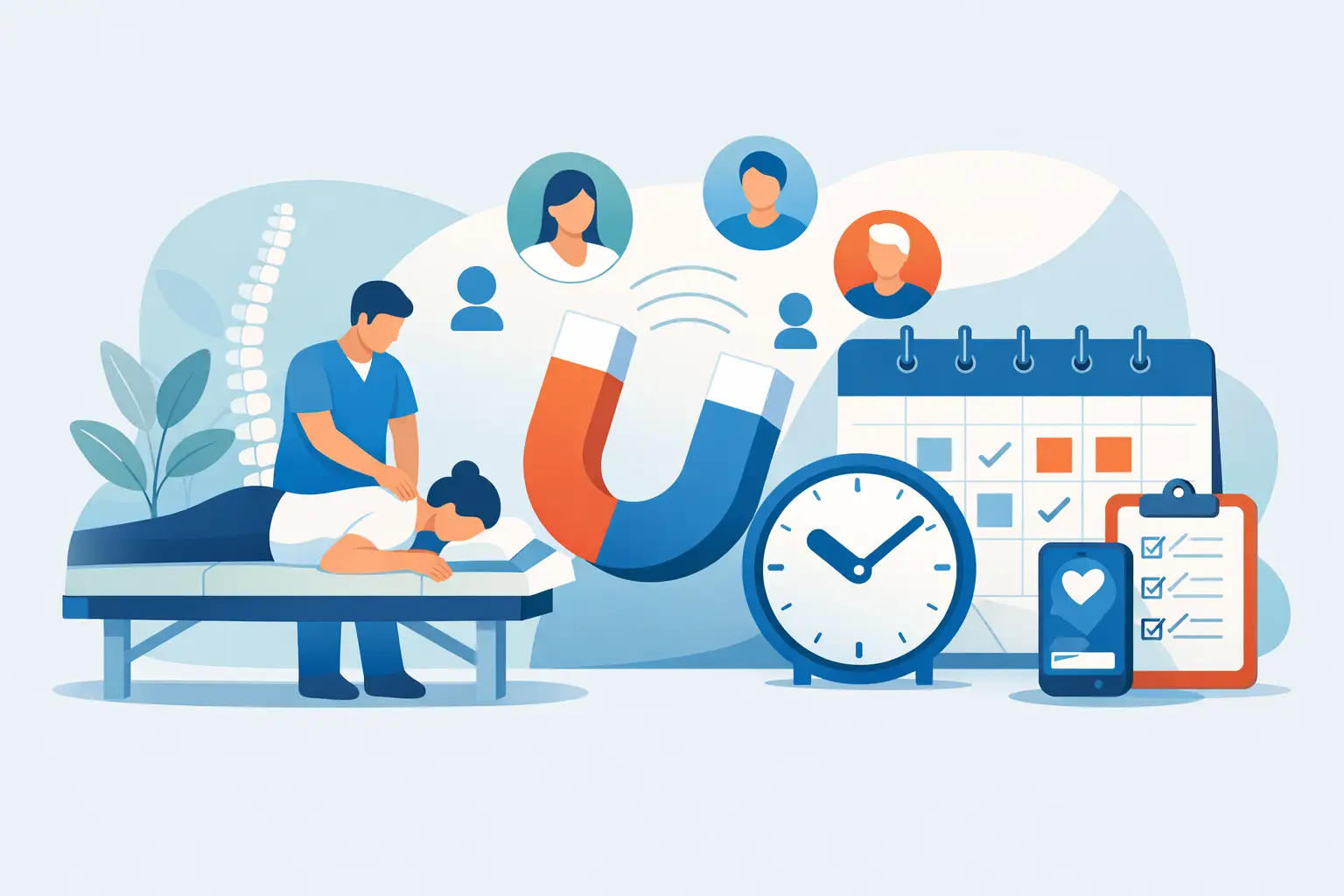
A prospective patient may scroll past dozens of local businesses before they see your clinic. If your Facebook ads for chiropractic clinics look generic, promise too much, or send people to a slow website, that moment is lost to the practice down the road.
Facebook and Instagram advertising can produce a consistent flow of new-patient opportunities, but only when it is built around how local patients actually choose care. They are not looking for another stock-photo ad about “wellness.” They want a credible local practice, a clear next step, and confidence that your team can help them address the reason they are searching.
For ambitious clinics, Facebook advertising is not a standalone tactic. It is a patient-acquisition system that connects positioning, creative, landing pages, front-desk follow-up, and measurable practice growth.
Why Facebook Ads Still Matter for Chiropractic Growth
Google Ads captures high-intent prospects who are actively searching for a chiropractor. Facebook and Instagram create demand earlier in the decision process. They put your practice in front of people in your market who may be dealing with recurring discomfort, recovering from an accident, trying to stay active, or simply looking for a better long-term healthcare routine.
That distinction matters. A Google searcher may be ready to book immediately. A Facebook prospect may need to see your clinic several times, understand your approach, and recognize your brand before taking action. The platforms work best together, not as substitutes.
Facebook also gives clinics room to establish visual authority. A polished video from your office, a clinician speaking directly to the camera, patient-education content, and a compelling explanation of what makes your practice different can do more for trust than a basic promotional graphic ever will. In a crowded market, familiarity often wins the first appointment.
The Biggest Reason Chiropractic Campaigns Fail
Most underperforming campaigns do not fail because Facebook “doesn’t work.” They fail because the practice runs an ad without building the system behind it.
A low-cost lead is not automatically a valuable lead. If the offer attracts people who only want a free service, if the booking experience creates friction, or if your front desk waits hours to respond, your cost per scheduled patient will rise quickly. Worse, the clinic may conclude advertising is the problem when the real issue is conversion and follow-up.
The objective is not to collect the largest possible number of form submissions. It is to generate qualified inquiries that become scheduled appointments, show up, begin care, and fit the type of practice you are building.
That requires clear answers to practical questions: Who is the ideal new patient? What makes your clinic meaningfully different? What offer reduces hesitation without cheapening your brand? How quickly does your team contact a lead? Which campaigns produce actual arrivals, not just names and phone numbers?
Build the Offer Around a Real Patient Decision
Your offer should make the first step feel easy while protecting the value of your care. The right approach depends on your practice model, local competition, insurance participation, and whether you are targeting family wellness, sports performance, personal injury, corrective care, or another patient segment.
A discounted new-patient consultation can work when your practice has strong clinical positioning and a proven conversion process. A more educational offer may be better for a premium practice that wants to lead with expertise rather than price. For example, an ad can invite local residents to schedule a consultation and movement assessment, then clearly explain what happens at the visit.
Avoid vague calls to action such as “Learn More About Chiropractic.” They give people no reason to act now. Avoid aggressive bargain messaging, too. It can fill your pipeline with low-commitment leads and train your market to view your clinic as a coupon provider.
The strongest offers are specific, easy to understand, and aligned with the patient experience after they schedule. If the ad promotes a thorough evaluation, the appointment should feel thorough. If the ad emphasizes family-centered care, the landing page and office environment should reinforce that promise.
Facebook Ads for Chiropractic Clinics Need Better Creative
Creative is where many clinics surrender the advantage. Generic spine imagery, copied captions, and overly polished stock photos rarely build distinction. Your ads should look like they came from a recognizable local healthcare brand, not a template library.
Use real footage of your office, your doctors, and your team whenever possible. A short, direct video explaining who you help and what a first visit looks like can outperform a static ad because it lowers uncertainty. Patients can see the environment, hear a confident clinician, and begin to picture themselves in your practice.
Keep the message patient-centered. Speak about the daily limitation or goal that brings someone to seek care, then explain your process without making unsupported promises. Facebook has strict policies around personal attributes and health-related advertising, so avoid language that implies you know the viewer’s condition. “Do you suffer from back pain?” is riskier than “Many local adults seek chiropractic care when discomfort begins limiting work, sleep, or activity.”
Test different creative angles, but do not test random ideas. A disciplined campaign might compare a doctor-led office video, a first-visit explainer, a family-care message, and a sports-performance message. Each should lead to the same core question: which message produces scheduled, qualified patients at a sustainable cost?
Target Locally, Then Let the Data Refine the Audience
Chiropractic is a local service. Your campaigns should be built around the geography your clinic can realistically serve, not broad statewide targeting that wastes budget on people who will never come through your doors.
Start with a practical radius or selected local ZIP codes based on your patient draw area. A dense urban clinic may need a tighter radius than a suburban or rural practice. Consider traffic patterns, commuter routes, local competition, and where your best existing patients live. The map matters as much as the ad.
Audience targeting should support the message, not replace it. Facebook’s platform has reduced some targeting options over time, and overly narrow audiences can limit delivery and drive costs higher. In many markets, a broad local audience paired with strong creative outperforms a complicated stack of interests.
Retargeting is usually worth the effort. People who watched your video, visited your landing page, or engaged with your social content have already shown interest. A follow-up ad can answer common objections, introduce your doctor, or remind them that appointment availability is limited. Just keep frequency under control. Familiarity builds trust; repetition without value builds annoyance.
Your Landing Page and Front Desk Decide the ROI
Sending ad traffic to your homepage is usually a conversion leak. A homepage has too many paths, too much information, and often no focused reason for the visitor to schedule. Build a dedicated landing page that mirrors the ad message and removes unnecessary distractions.
It should quickly state who the offer is for, what the patient can expect, why your practice is credible, and how to take the next step. Include real clinician photos, clear appointment options, and social proof where appropriate. Keep the lead form short enough to complete on a phone. Asking for a name, phone number, email, and preferred appointment time is often sufficient.
Then comes the operational reality many practices overlook: speed to lead. A new inquiry should receive an immediate confirmation and a personal call or text as quickly as possible. The clinic that contacts a lead within minutes has a major advantage over the clinic that calls the next morning.
Your team also needs a defined script and follow-up cadence. Not every prospect will answer the first call. That does not make the lead worthless. A thoughtful mix of calls, texts, and reminders can recover appointments that would otherwise disappear.
Track More Than Cost Per Lead
Cost per lead is a useful signal, but it is not the scoreboard. A $15 lead that never answers is more expensive than a $45 lead that schedules, arrives, and becomes a long-term patient.
Track the full path from ad spend to lead, booked appointment, show, new patient, and, when possible, case acceptance and patient value. This is how you identify whether the weakness is ad performance, lead quality, scheduling, show rate, or your consultation process.
Campaigns also need enough time and budget to generate meaningful data. Constantly editing ads after a few days can disrupt delivery and create false conclusions. At the same time, do not let a poor campaign run indefinitely out of hope. Review performance on a regular schedule, make deliberate adjustments, and scale what is proving profitable.
Turn Advertising Into a Local Market Advantage
The clinics winning with paid social are not chasing vanity metrics. They are building a repeatable pipeline while strengthening the brand patients recognize in their community. Their ads look credible, their message is clear, their website converts, and their team treats every inquiry like a real revenue opportunity.
That is the standard to aim for. If your clinic is ready to stop losing new-patient leads to competitors with louder marketing and weaker care, build Facebook campaigns around the complete patient journey. The next patient in your market is already scrolling. Make sure your practice gives them a compelling reason to stop, trust, and schedule.