Your next growth opportunity may already be sitting in your patient database. When you launch chiropractic reactivation campaigns with the right offer, timing, and follow-up, you can turn inactive patients into scheduled appointments without paying to acquire every lead from scratch.
That matters because a patient who already knows your clinic is not starting at zero. They recognize your name, understand your care environment, and may simply need a relevant reason to return. The practices that win this opportunity do not send one generic blast and hope for the best. They build a deliberate retention engine that supports patient outcomes and protects practice revenue.
Why Reactivation Is a Growth Strategy, Not a Cleanup Task
Most chiropractic practices have a meaningful number of former patients who drifted away after initial relief, a change in routine, an insurance transition, a move, or simple appointment fatigue. Some completed a recommended care plan but never converted into wellness or maintenance care. Others intended to return and got busy.
Those patients are not necessarily dissatisfied. They are often unprompted.
A smart reactivation campaign gives them a clear, patient-centered reason to reconnect. It also makes sound business sense. Re-engaging an existing patient can be less expensive and faster than generating a cold lead through Google Ads, social advertising, or local search. That does not mean new patient acquisition should stop. It means your practice should not ignore an audience you already earned.
The trade-off is that reactivation cannot compensate for poor service, inconsistent communication, or a weak patient experience. If patients left because of unresolved concerns, aggressive messaging will not repair the relationship. Your campaign needs to be supported by a clinic experience worth returning to.
Start With the Right Patient Segments
Sending the same message to every inactive patient is the fastest way to make a campaign feel generic. Segment your list by the reason a patient may be ready to return and the type of care relationship they had with your office.
A practical starting point is to separate patients who have been inactive for 90 to 180 days, six to 12 months, and more than 12 months. The 90-day group may need a simple care reminder. A patient absent for a year may need a more compelling re-entry message and a low-friction way to schedule.
You should also distinguish between patients who finished a care plan, patients who dropped off early, families, injury-related cases, and former maintenance patients. A former wellness patient should not receive the same message as someone who stopped after two visits for acute low back pain.
Before contact begins, clean your data. Remove invalid phone numbers and outdated email addresses, confirm communication consent, and follow applicable HIPAA, TCPA, and state privacy requirements. Your patient management system, texting platform, and marketing workflow must protect patient information. Growth is never an excuse for careless communication.
Create an Offer That Gives Patients a Reason to Act
The best reactivation offers reduce friction without devaluing your care. A vague message like “We miss you” rarely creates urgency. A clear reason to schedule does.
For many clinics, a complimentary spinal health check, posture screening, progress reassessment, or wellness consultation can work well. Others may promote a limited-time return visit option or an educational event tied to mobility, ergonomic stress, sports performance, or seasonal activity. The right approach depends on your state regulations, payer mix, clinical model, and what your team can deliver confidently.
Avoid leading with a discount if your brand is positioned as premium, outcome-driven care. A price-first message can train patients to wait for promotions. Often, the stronger offer is access: an appointment priority window, a focused reassessment, or a chance to update a care strategy after months away.
Your offer should answer three questions immediately: Why return now? What happens at the appointment? How do I schedule? If a patient has to interpret the message, search your website, and call during business hours just to claim it, response rates will suffer.
Match the message to the patient’s likely motivation
Former maintenance patients may respond to a message about staying ahead of recurring discomfort and maintaining mobility. Patients who left during a care plan may need reassurance that restarting is straightforward and personalized. Patients with families may respond to a seasonal reminder about backpacks, travel, sports, or long hours at a desk.
Keep the language focused on education and appropriate care, not guarantees. Chiropractic marketing should build confidence without making promises that cannot be supported clinically.
Use More Than One Touchpoint
One email is not a campaign. It is an announcement.
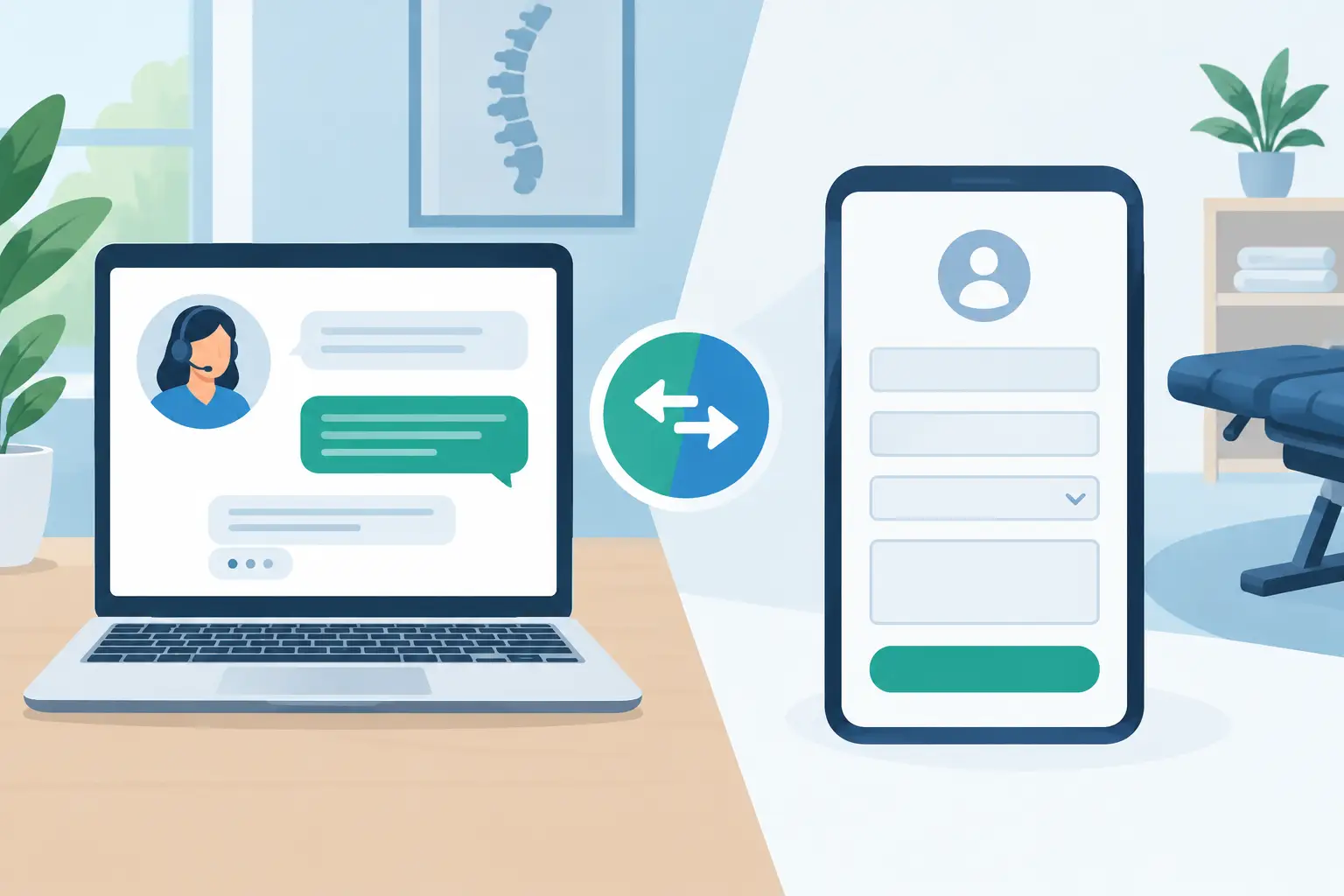
Effective chiropractic reactivation campaigns typically use a coordinated sequence of email, text messaging where consent allows, phone follow-up for priority patients, and relevant social media retargeting. Each channel has a job. Email provides context. Text creates timely visibility. A personal call can recover higher-value relationships. Paid retargeting can keep your practice recognizable without revealing private health information or using sensitive patient data improperly.
A simple campaign might begin with an email that reintroduces the offer and scheduling option. A few days later, send a short text reminder to patients who have not booked. Follow with a second email that adds a useful educational angle, such as the effect of prolonged sitting or returning to activity after a busy season. For select patient segments, have a trained team member call with a genuine, non-scripted check-in.
The goal is not to chase people. The goal is to remain visible long enough for the right moment to arrive.
Make Scheduling Frictionless
Your campaign can generate interest and still fail at the finish line if booking is difficult. Every message should point to one clear action: schedule online, call the front desk, or reply by text. Do not offer three competing calls to action in the same message.
If you use online scheduling, make sure it works cleanly on mobile devices. If the front desk is responsible for booking, make sure staff members know the offer, the patient segment, appointment availability, and the language to use when someone calls. Nothing undermines a campaign faster than a patient who responds and reaches an unprepared team member.
Capacity matters too. Do not launch a major campaign if your schedule cannot absorb the demand within a reasonable timeframe. A wait of several weeks can erase the urgency you created. Start with a manageable segment, assess response, and expand once operations are ready.
Measure Revenue, Not Just Replies
A campaign that produces a high open rate but few completed visits is not a win. Track the numbers that affect practice growth: patients contacted, delivery rate, response rate, appointments scheduled, show rate, reactivated patients, care plan acceptance, and collected revenue.
Also measure reactivation by segment. You may find that patients inactive for four to eight months respond far better than those absent for two years. You may learn that a posture-focused message outperforms a general wellness reminder, or that personal calls drive the highest return rate among former long-term patients.
These insights let you invest where the practice gets the best return. They also reveal operational problems. If patients schedule but do not show, your confirmation process may need attention. If they return once but do not continue care, the issue may be expectation-setting, reporting, or follow-up inside the clinic.
Build Reactivation Into Your Ongoing Marketing Calendar
The strongest clinics do not treat reactivation as a once-a-year rescue effort. They build it into an ongoing retention calendar. Seasonal campaigns can align with back-to-school routines, holiday travel, New Year health goals, spring activity, summer sports, or year-end benefit reminders when appropriate.
Your in-office marketing should reinforce the same message. Patient education materials, TV slides, posters, and staff conversations can help active patients understand the value of continued care before they become inactive. That is where a brand-led strategy from a chiropractic-focused partner such as MyChiroPractice can connect patient education, retention messaging, paid acquisition, and local visibility into one growth system.
Reactivation is not about pressuring former patients into an appointment. It is about reminding the right people that your practice is ready when their health goals, routines, and needs bring them back. Treat that relationship with care, make the next step easy, and your database can become one of the most reliable sources of appointment volume your clinic owns.