A prospective patient finds your practice at 9:40 p.m., reads two reviews, likes what they see, and taps “Schedule Now.” If that button leads to a slow form, a confusing scheduler, or a voicemail box that will not be checked until tomorrow, the patient may be in a competitor’s calendar before your front desk opens.
That is the business case for chiropractic booking optimization. Your Google rankings, ads, social campaigns, and website design only produce revenue when interested people take the next step. The goal is not simply more form submissions. It is a higher percentage of qualified prospects becoming scheduled, confirmed new patients who actually arrive.
Chiropractic Booking Optimization Is Revenue Optimization
Most practices think about marketing and scheduling as separate systems. Marketing generates leads. The front desk handles the rest. That separation costs practices new-patient volume because every handoff creates friction.
A patient does not care whether the problem is a website issue, a missed call, an unavailable appointment type, or an unclear insurance question. They only know that booking with your clinic felt harder than booking somewhere else. In competitive local markets, that is enough to lose them.
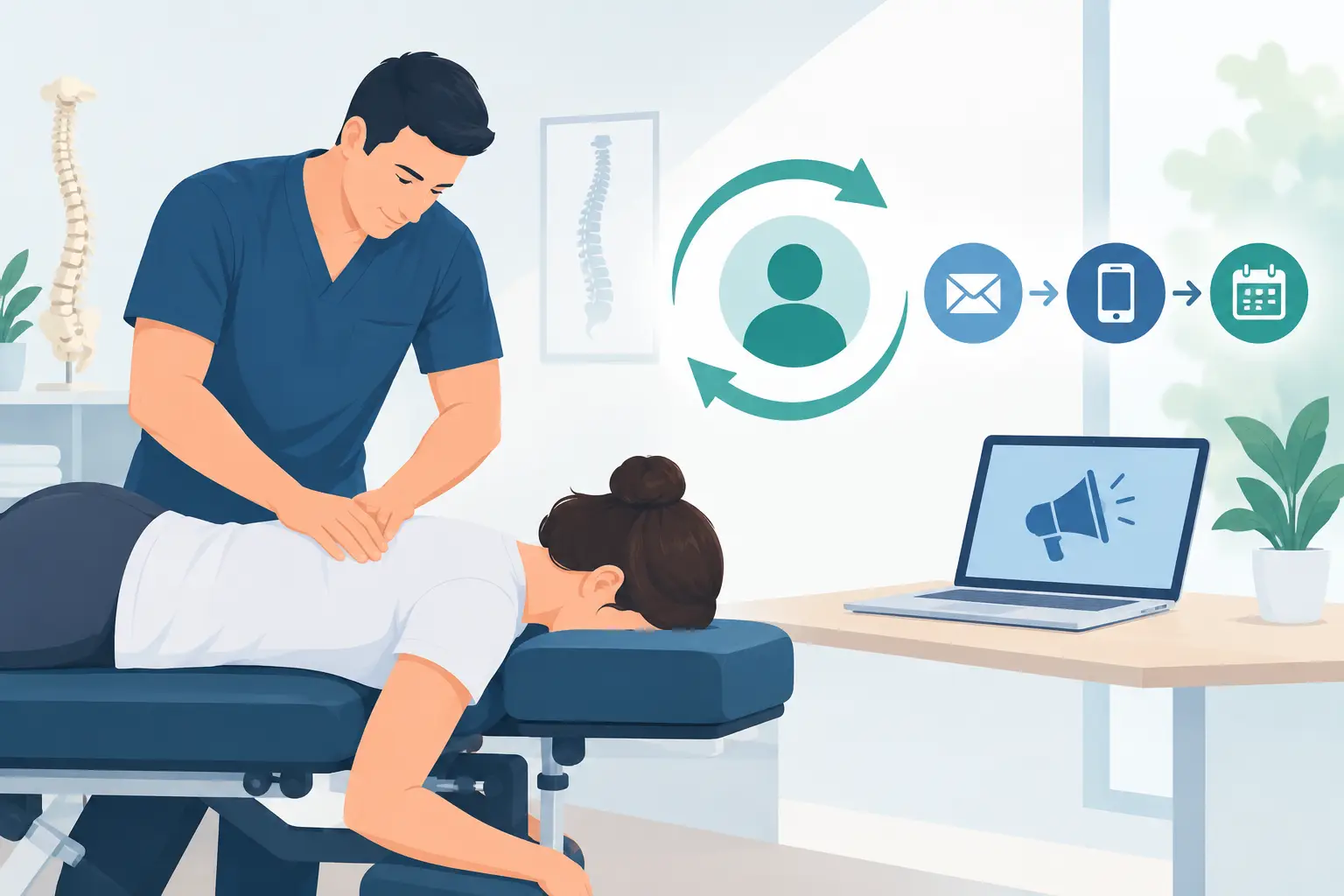
The strongest practices treat the booking path as part of their patient acquisition engine. Every campaign, landing page, Google Business Profile action, phone call, text message, and online scheduling option should guide the right patient toward one clear outcome: a scheduled consultation or new-patient appointment.
This does not mean forcing every visitor through the same path. A patient with acute low back pain may want the first available opening. A parent researching care for a child may need reassurance before committing. A personal injury prospect may have different questions than a wellness patient. Optimization means matching the path to the patient’s level of urgency and confidence while keeping the decision easy.
Find Where New Patient Leads Are Escaping
Before changing software or redesigning a page, identify the breakpoints. Many clinics assume they need more traffic when the larger opportunity is converting the traffic they already buy or earn.
Start with the numbers that matter: website visitors, booking-page visits, phone calls, form submissions, online appointments, appointments confirmed, new patients who show, and new patients who begin care. Review these by source. Google Ads leads may behave differently from organic search leads, referrals, Facebook leads, or patients coming through your Google Business Profile.
The biggest leaks are often visible quickly. If people visit a booking page but do not schedule, the process may be too long or unclear. If calls are high but appointments are low, your team may need a stronger call flow. If appointments are booked but no-shows are elevated, the issue may be expectation-setting, reminder timing, or appointment availability rather than lead quality.
Do not accept “they were shopping around” as the default explanation. Some prospects will compare offices, of course. But a large percentage of lost leads are not rejecting chiropractic care. They are rejecting delay, uncertainty, or a weak first impression.
Build a Booking Path That Creates Confidence
Your booking experience should answer the questions patients are already asking in their heads: Can this clinic help with my problem? Is this practice credible? What happens at the first visit? Can I get in soon? Will someone make this easy?
Give each campaign one primary action
A paid ad for sciatica relief should not send patients to a general homepage with six competing choices. A local search visitor looking for a chiropractor near them should see location details, trust signals, services, reviews, and a direct route to call or book.
Every high-intent page needs a prominent action above the fold and repeated naturally as patients scroll. Depending on your practice, that may be “Book Your First Visit,” “Request an Appointment,” or “Call for Same-Day Availability.” Vague buttons like “Learn More” allow ready-to-book visitors to drift away.
The right primary action depends on your operations. If your front desk closes quickly and cannot respond to forms after hours, online booking may outperform a request form. If your case acceptance process requires a conversation first, a short form followed by rapid contact may be better. The point is alignment between the promise on the page and what your team can deliver.
Reduce form friction without losing lead quality
A new patient does not need to complete an intake packet to express interest. Asking for a name, mobile number, email, preferred contact method, and a brief reason for the visit is often enough to start the conversation. Longer clinical forms can come after the appointment is secured.
Each required field lowers completion rates. That does not mean collecting no information. It means collecting only what your scheduling team genuinely needs at that stage. Keep sensitive health details out of casual lead forms unless your systems and workflow are designed to handle them appropriately.
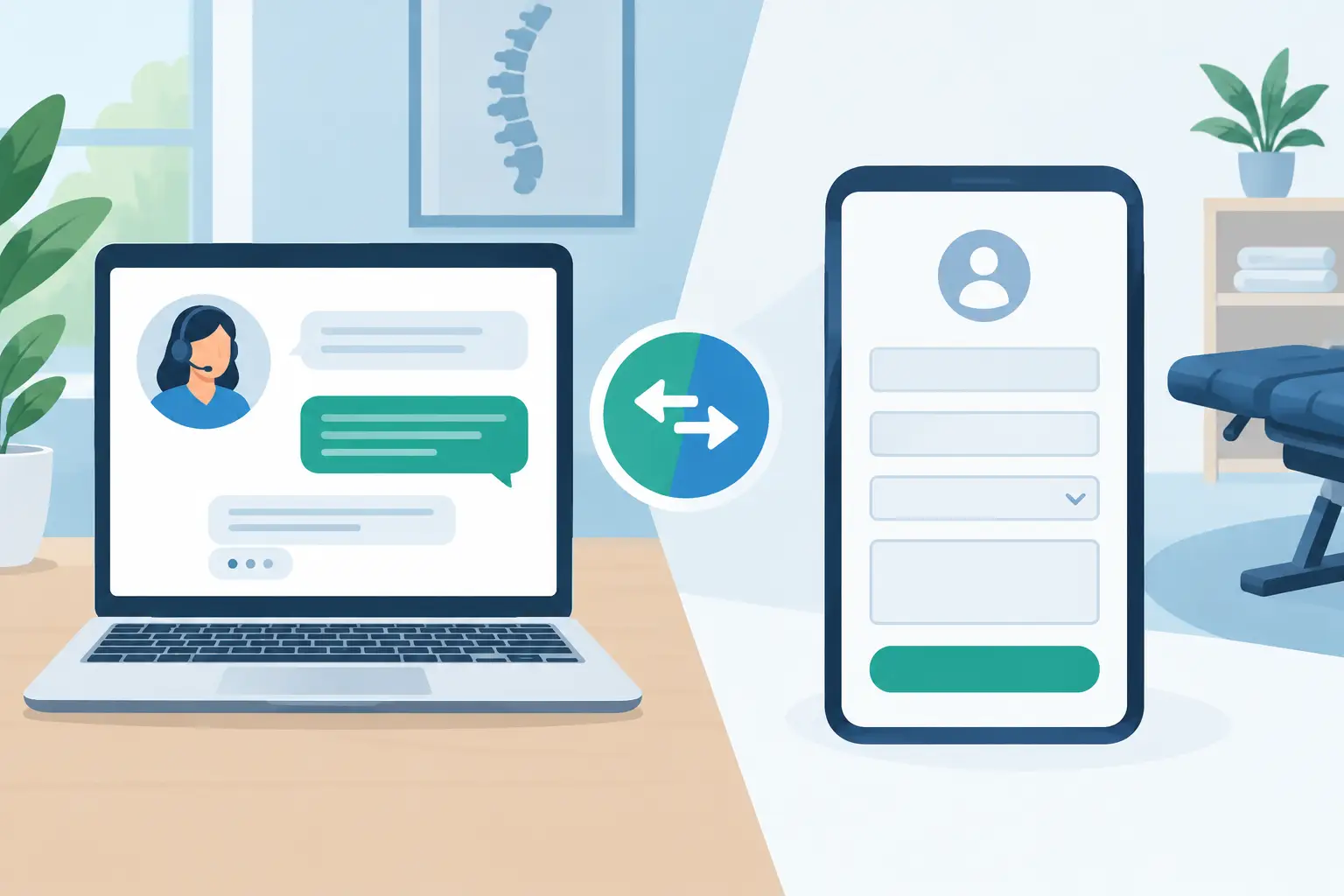
Mobile experience matters most. Patients commonly search from a phone while sitting in a car, at work, or after a flare-up. Buttons must be easy to tap, forms must be readable, and the booking flow must not require pinching, zooming, or creating an account before seeing availability.
Make your first visit feel knowable
Anxiety is a conversion barrier. Many first-time chiropractic patients do not understand what an initial appointment includes, how long it lasts, or what they should bring. Clear first-visit language reduces that uncertainty without making medical promises.
Use confident, patient-friendly copy. Explain the general process, clarify how to contact the office with insurance questions, and show the human side of your practice through credible provider information, office imagery, patient reviews, and educational materials. Premium visual credibility matters because patients make fast judgments about professionalism.
Speed to Lead Is a Competitive Weapon
The lead that waits is the lead your competitor gets to speak with first. A patient who requests an appointment from your website should receive an immediate acknowledgment and a clear expectation for follow-up. During business hours, the ideal response is measured in minutes, not hours.
That requires a real operating process, not a vague instruction for someone to “call leads back.” Assign ownership. Build a repeatable script for calls and texts. Define how many follow-up attempts occur, over what timeframe, and when a lead is considered unreachable. Track whether the patient was contacted, scheduled, confirmed, and seen.
Your front desk should be trained to lead the conversation toward an appointment. They can answer basic questions, establish urgency, and offer specific openings without sounding pushy. “We have an opening tomorrow at 10:30 or Thursday at 4:00. Which works better for you?” is stronger than “When would you like to come in?”
After booking, confirmation communication protects your marketing investment. A well-timed text or email can reinforce the appointment time, parking details, paperwork expectations, and what happens next. For practices with frequent no-shows, a personal confirmation call may be worth the staff time. For others, automated reminders plus an easy reschedule option may be sufficient. Test against your actual show rate instead of copying another clinic’s process.
Measure the Metrics That Reveal Growth
A cheap lead is expensive if it never schedules. A high-cost lead can be profitable if it produces a patient who shows, starts care, and refers family members. That is why chiropractic booking optimization must be measured beyond cost per lead.
Track booking rate from each source, contact rate, speed to first response, show rate, and cost per completed new-patient visit. If possible, connect marketing sources to care-plan acceptance and patient value over time. This gives you a more honest view of which channels deserve more investment.
Also watch appointment supply. Marketing can work perfectly while your schedule creates unnecessary loss. If online booking shows no near-term availability, or your only after-work slots are booked weeks out, motivated patients will choose a more accessible practice. Adding capacity, protecting new-patient blocks, or adjusting provider schedules can create growth faster than increasing ad spend.
Turn Better Booking Into Local Market Leadership
The practices that win their market do not merely appear in search results. They make it easier to become a patient than anyone else nearby. Their brand looks credible, their offer is clear, their phones are answered, and their follow-up is disciplined.
This is where an integrated strategy matters. Local SEO can generate demand. Google Ads can capture urgent intent. Strong website design can establish trust. Patient education in the office can reinforce confidence after arrival. But the booking process is where those investments either compound or disappear.
MyChiroPractice helps chiropractic practices connect the full acquisition path, from first search to scheduled patient, so growth is not left to chance. The clinic that responds faster, presents better, and removes more friction does not need to hope prospects choose them. It gives prospects a clear reason to book now.
Audit one path this week: search for your own practice on a phone, choose a service page, attempt to book, and time the response. The gaps you find may be the fastest route to more new patients already looking for your care.