A prospective patient with a stiff neck does not search for a chiropractic practice because they want to evaluate your marketing stack. They search because they hurt, they are skeptical, and they want a credible local answer fast. AI patient acquisition is changing how that answer is found, evaluated, and acted on. For chiropractic practices, the opportunity is not to replace your team with software. It is to remove the friction that lets motivated new patients choose the clinic down the street.
The practices that win will use AI to sharpen their visibility, improve response speed, and create a more relevant patient journey from first search to scheduled visit. The ones that treat AI as a novelty will keep losing leads to competitors with better websites, faster follow-up, stronger reviews, and a clearer message.
AI Patient Acquisition Starts Before the First Click
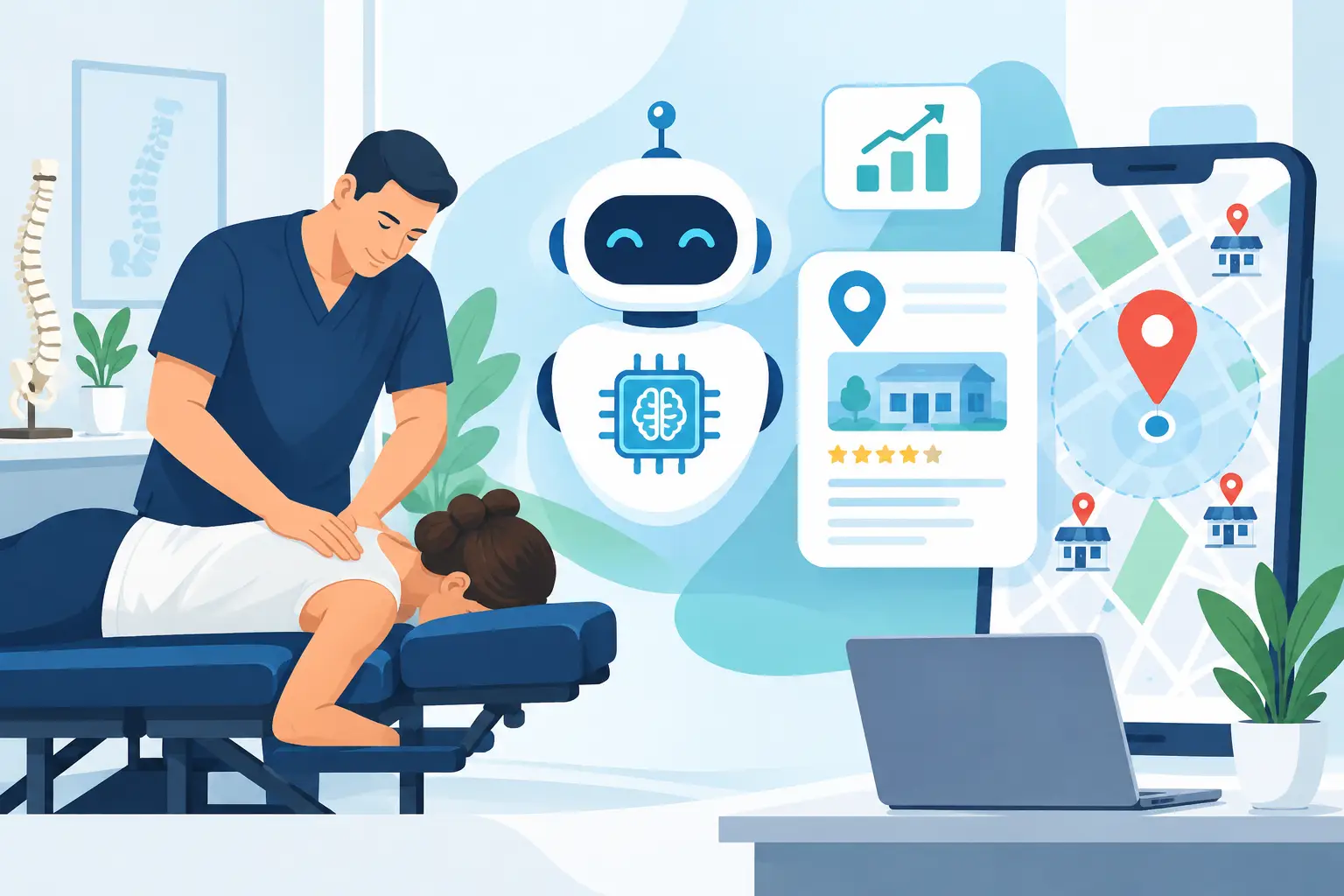
AI does not create demand from nothing. It helps your practice identify, capture, and convert demand that already exists in your market. That begins where patients look for answers: Google, map results, social platforms, online reviews, and increasingly, AI-powered search experiences that summarize local options before someone visits a website.
A patient may ask a search tool, “Who is the best chiropractor near me for lower back pain?” or “Can a chiropractor help after a car accident?” The platforms returning answers rely on signals that have been familiar to local search for years: a clear website, accurate location information, relevant service pages, trusted reviews, authoritative content, and a consistent reputation across the web.
This is why AI visibility is not a shortcut around foundational marketing. If your practice website is slow, generic, hard to navigate on a phone, or unclear about what makes you different, artificial intelligence will not rescue it. It may accelerate the gap between your clinic and the competitor that has already built stronger local authority.
For a chiropractic practice, the first priority is positioning. Are you the obvious choice for family chiropractic, sports injury care, auto accident cases, prenatal patients, corrective care, or a defined combination of services? A vague message creates a vague digital footprint. AI systems, search engines, and patients all respond better when they can understand exactly who you help and why your practice is credible.
Where AI Creates a Real Competitive Advantage
The most valuable use of AI in chiropractic marketing is not flashy content generation. It is operational speed paired with better decision-making. When used well, it helps your practice act on marketing data before budget gets wasted or leads go cold.
Faster lead response without a colder patient experience
New patient leads are perishable. Someone who submits a form after searching for neck pain may also submit forms to two other local offices. If your front desk calls back hours later, your competitor may already have the appointment.
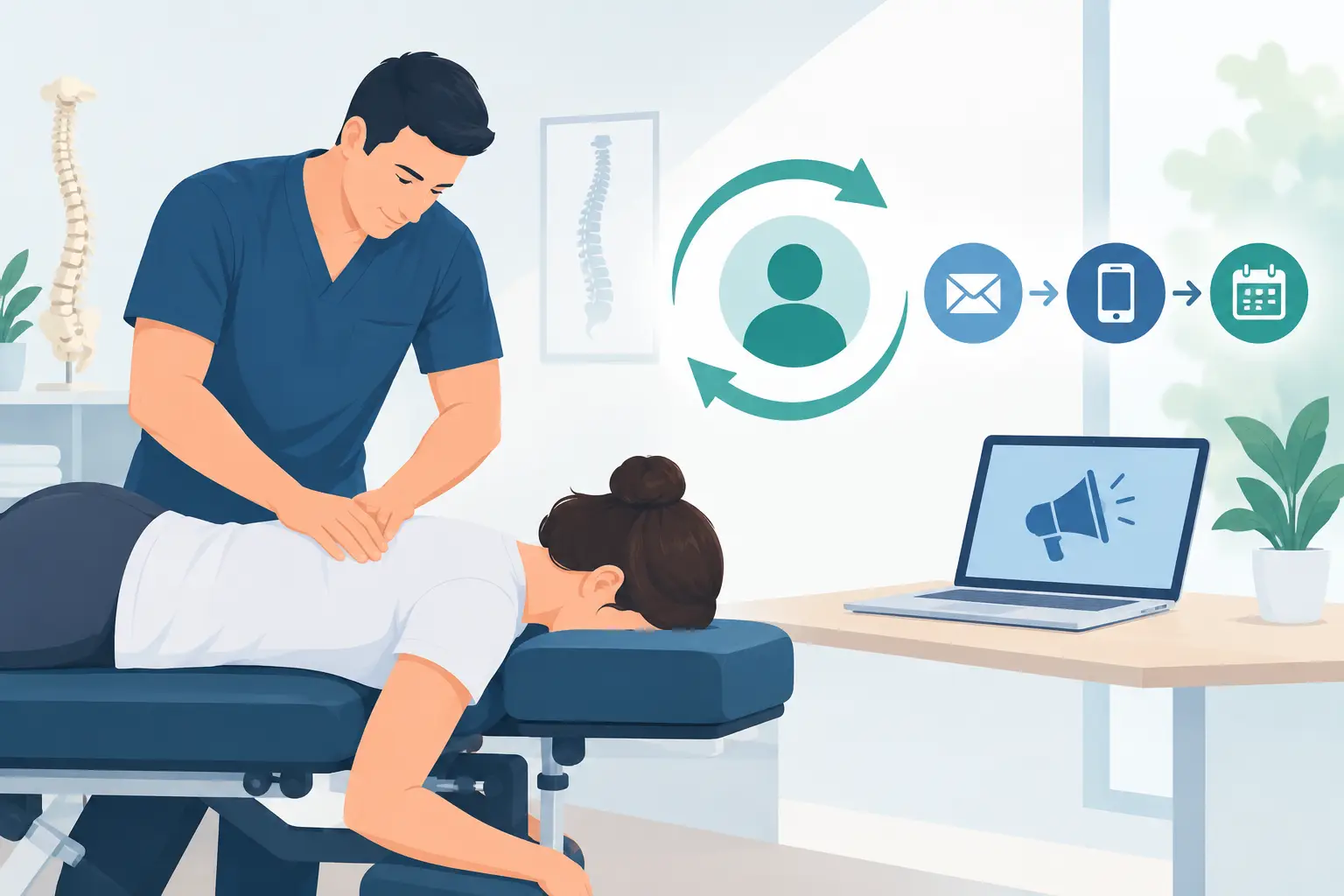
AI-assisted systems can help route inquiries, categorize lead sources, trigger immediate confirmation messages, and notify the right person to follow up. This does not mean handing clinical conversations to an automated bot. It means ensuring a real member of your team has the context and urgency needed to respond quickly.
The distinction matters. A patient asking about insurance, appointment availability, or directions can receive a fast, helpful response. A patient asking for medical advice, discussing symptoms, or sharing sensitive health details requires appropriate human handling and privacy safeguards. Speed earns the conversation. Empathy and professionalism win the appointment.
Smarter advertising decisions
Google Ads and social advertising can produce new patient volume quickly, but only when the campaign is built around actual practice economics. AI can help identify patterns in search terms, ad performance, landing-page behavior, and call outcomes. That lets your marketing team shift budget toward the campaigns producing qualified appointments instead of vanity metrics.
For example, a campaign generating cheap clicks for “chiropractor near me” may look successful until you discover callers are asking only about price and never scheduling. Meanwhile, a more specific campaign around auto accident chiropractic care may cost more per lead but produce patients with higher treatment acceptance and stronger lifetime value.
AI can surface the pattern. Your strategy still has to decide what a qualified patient means for your practice. That depends on your services, capacity, payer mix, market, and growth goals. More leads are not automatically better leads.
Better local content at a useful scale
Most chiropractic websites are underbuilt. They have a home page, a services list, a contact page, and little else to establish expertise in the local market. That leaves the practice invisible for the questions patients actually ask before they are ready to schedule.
AI can accelerate research, content planning, first drafts, and content updates. Used carelessly, it can also fill your website with bland pages that sound exactly like every other clinic in town. Patients can feel the difference, and so can search engines.
The winning approach is to use AI as an efficiency layer, then apply chiropractic expertise and local specificity. Your content should reflect how your office explains care, what conditions you commonly see, what patients can expect, and what differentiates your experience. It must also avoid exaggerated outcomes, unsupported health claims, and generic promises that erode trust.
The Website Still Does the Conversion Work
AI may change discovery, but your website remains the place where many patients decide whether to call. A conversion-focused chiropractic website should answer practical questions immediately: What do you treat? Where are you located? Can I request an appointment? Do you accept my insurance or offer clear payment options? Why should I trust this office?
Design matters because patients judge clinical professionalism before they ever meet you. A dated logo, confusing navigation, weak photography, or an overloaded home page can make a capable practice look interchangeable. On the other hand, premium visual branding and a clear message make the decision easier for a nervous first-time patient.
Every key service line should have a focused path to conversion. An auto injury visitor has different concerns than a parent looking for pediatric chiropractic care. Sending both to the same generic contact form forces them to do the work your website should be doing.
AI can help analyze where visitors abandon a page, which questions appear most often in calls, and which messages generate booked appointments. But the core conversion principles remain human: clarity, trust, proof, convenience, and a direct next step.
Build AI Patient Acquisition Around the Full Patient Journey
The strongest growth programs connect several channels instead of treating each one as a separate project. Your Google Business Profile supports map visibility. Your website turns that visibility into calls and forms. Paid ads create immediate opportunities while SEO compounds over time. Social media reinforces familiarity. In-office education supports confidence after the patient arrives.
That last step is often ignored. Patient acquisition is not complete when an appointment is booked. If a new patient does not understand your recommendations, feels uncertain about the care plan, or receives inconsistent communication after the first visit, your marketing investment leaks out the back door.
Educational materials, treatment-room visuals, TV slides, and consistent social content can reinforce the message patients encountered online. The goal is not to pressure people. It is to help them understand their options and feel confident they chose a professional practice with a clear process.
This is also where AI-generated marketing must be reviewed carefully. Any patient-facing material needs to be accurate, compliant, and aligned with your actual clinical standards. Never allow automated tools to invent testimonials, make claims your practice cannot substantiate, or expose protected health information. Efficiency is valuable. Trust is nonnegotiable.
What to Measure So AI Does Not Become Another Expense
A practice can spend heavily on technology and still have no idea whether it is growing. The numbers that matter are not the number of automated messages sent or the amount of content published. Track new patient calls, form leads, booked appointments, show rates, cost per booked patient, cost per acquired patient, and the revenue quality of each lead source.
You should also listen to calls and examine front-desk performance. If ads are generating inquiries but scheduling is weak, the problem may not be the campaign. It may be response time, scripting, availability, or a lack of training around common objections.
Set a baseline before making major changes. Then test one meaningful variable at a time, whether that is a new landing page, a revised offer, improved review generation, or faster lead routing. AI can identify correlations quickly, but disciplined measurement prevents your practice from mistaking activity for growth.
The chiropractors who dominate their markets will not be the ones using the most AI tools. They will be the ones building a faster, clearer, more credible path from local search to long-term patient trust. MyChiroPractice helps practices turn that path into a growth system designed to compete, convert, and keep producing qualified new patient opportunities.