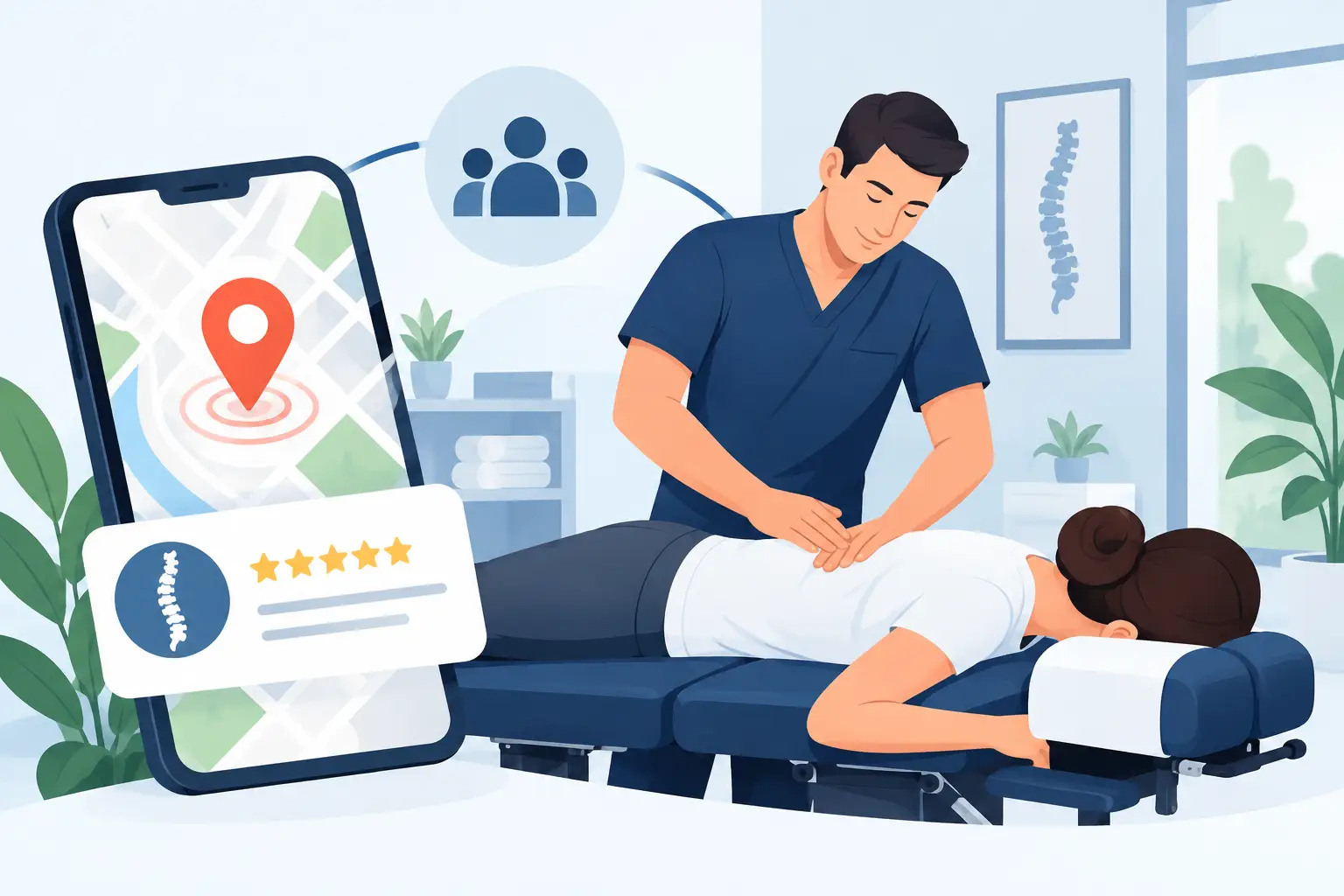
A patient asks an AI tool, “Who is the best chiropractor near me for sciatica?” They may never scroll through ten blue links. They may receive a short, confident answer naming a few nearby practices, explaining what each is known for, and pointing them toward the next step.
That is why AI search trends chiropractors cannot ignore are no longer a future-facing marketing conversation. They are a patient-acquisition issue. If your clinic is absent, unclear, or less credible than the practice across town, AI-powered search can direct high-intent patients to your competitors before they ever see your website.
The opportunity is not to chase every new AI platform. It is to build the kind of local brand, digital authority, and patient experience that search engines and AI systems can confidently recommend.
AI Search Is Changing How Patients Choose a Chiropractor
Traditional local SEO focused heavily on earning visibility in Google Maps and organic results. Those fundamentals still matter. A strong Google Business Profile, accurate location data, quality reviews, and a conversion-focused website remain essential.
What is changing is how information is delivered. Google AI Overviews, conversational search tools, voice assistants, and answer engines are increasingly synthesizing information instead of simply displaying a list of pages. Patients can ask more specific questions, such as:
- “Which chiropractor near me treats sports injuries?”
- “Is chiropractic care helpful for pregnancy-related back pain?”
- “Find a chiropractor with early morning appointments and good reviews.”
- “What should I expect at my first chiropractic visit?”
AI systems look for clear, consistent, credible answers across the web. They evaluate the signals surrounding your practice: your services, reviews, location, provider credentials, website content, reputation, and how reliably your information appears across trusted sources.
This creates a more competitive environment. Ranking for “chiropractor near me” is still valuable, but winning the next wave of searches means becoming the obvious answer for the conditions, audiences, and care experience your ideal patients seek.
The AI Search Trends Chiropractors Need to Watch
Local relevance is becoming more specific
A generic website that says your practice offers “quality chiropractic care” gives AI very little to work with. Patients do not search in generic language when they are hurting, frustrated, or trying to find the right provider for their family.
They search for relief from a real problem. They look for care related to neck pain, auto injuries, disc concerns, sports performance, prenatal discomfort, pediatric care, headaches, or mobility limitations. Your website needs clear pages and useful copy that connect your services to legitimate patient needs without making unsupported medical claims.
The trade-off is focus. A clinic that tries to rank for every condition, every technique, and every patient type can sound vague and interchangeable. A practice with a well-defined clinical focus, backed by strong service pages and patient education, is easier for AI systems and prospective patients to understand.
Reputation is no longer just a star rating
Five stars matter. But the language inside your reviews matters, too. When patients describe a welcoming team, a thorough examination, help with specific concerns, convenient scheduling, or a clear care plan, they create context that supports your local authority.
A review profile with 200 short comments saying “Great place” is useful. A profile with consistent, detailed feedback about the patient experience is more persuasive to both people and machines.
Your review strategy should be ongoing, compliant, and built into your patient journey. Ask at the right moments, make the process simple, and never pressure patients to mention a diagnosis or outcome. The goal is an authentic record of trust, not manufactured praise.
Brand consistency becomes an AI confidence signal
If your practice name, phone number, hours, provider information, or service descriptions conflict across directories, social profiles, maps, and your website, you create uncertainty. AI systems are designed to reduce uncertainty before presenting an answer.
Consistency also applies to your positioning. If your website presents you as a family wellness practice, your social content talks only about athletic performance, and your reviews emphasize personal injury cases, your market identity becomes fragmented.
You can serve multiple audiences, but your core message must be deliberate. The strongest chiropractic brands make it easy to answer one question: why should this patient choose your practice instead of another local clinic?
Helpful content beats empty keyword pages
AI search rewards content that answers questions clearly. That does not mean publishing dozens of thin blog posts stuffed with terms like “best chiropractor” or “chiropractic adjustment near me.” It means building a useful library of patient-focused information that reflects the questions your front desk hears every week.
A strong article about what happens during a first visit can reduce appointment anxiety. A clear page about auto injury care can help patients understand when to seek evaluation. A guide to posture, mobility, or exercise recovery can demonstrate that your clinic is serious about education, not just transactions.
Content must be clinically responsible. Avoid promises of cures, exaggerated outcomes, and broad claims that cannot be substantiated. Patients are skeptical, and AI tools are increasingly cautious about health-related recommendations. Credibility wins the long game.
How to Build an AI-Ready Chiropractic Marketing System
AI visibility is not a single tactic. It is the result of an organized growth system that gives search platforms and patients the same message: this practice is legitimate, relevant, trusted, and easy to choose.
Start with your local foundation
Your Google Business Profile should accurately reflect your primary categories, services, hours, address, phone number, appointment process, and current photos. Add high-quality images that show the exterior, reception area, treatment spaces, team, and brand experience. Patients want to know they are choosing a real, professional clinic before they call.
Then audit the rest of your local presence. Your name, address, and phone number should match everywhere. Provider bios should be current. If you have multiple locations, each location needs its own accurate information and locally relevant content.
This is unglamorous work, but clinics lose new patient leads every day because the basics are neglected while competitors are more visible and easier to verify.
Make your website answer real patient questions
Your website should not function like an online brochure. It should help a prospective patient make a decision. Every core service page needs a clear explanation of who the service is for, what concerns it may address, what a visit typically involves, and how to schedule.
Use plain language first. You can include appropriate chiropractic terminology, but patients should not need a clinical dictionary to understand your value. Strong page structure also matters: descriptive headings, logical sections, accurate provider information, local relevance, and obvious calls to action all help users and search systems interpret your content.
Most importantly, give each page a job. A page about spinal decompression should not simply describe equipment. It should explain the patient problem, establish the clinic’s approach, and move the right visitor toward a consultation or appointment request.
Turn clinical expertise into visible authority
Your doctors already answer high-value questions every day. Capture that expertise in short videos, FAQs, service content, social posts, and patient education materials. This creates a larger body of evidence that your clinic understands the conditions and concerns patients bring to your door.
The best approach depends on your capacity. A one-doctor practice may benefit most from a focused set of core service pages, consistent reviews, and two useful pieces of educational content per month. A multi-provider clinic with expansion goals may need location-specific content, provider-led video, reputation management, paid search, and a more aggressive local authority strategy.
Do not confuse more content with more authority. Publish fewer assets if necessary, but make each one specific, accurate, and aligned with your patient-growth priorities.
Protect conversion after the AI recommendation
Getting mentioned or found is only half the battle. If a patient reaches your website and finds a dated design, vague messaging, slow pages, or no easy way to request an appointment, your marketing investment leaks out of the funnel.
AI search can create more qualified discovery, but conversion still happens through trust. Your site needs strong visual credibility, mobile-first usability, clear scheduling paths, proof from real patients, and messaging that separates your clinic from the commodity providers in your market.
This is where branding and performance marketing must work together. A polished brand creates confidence. Local SEO creates visibility. Paid campaigns can capture immediate demand. Patient education reinforces value after the appointment. When these pieces operate separately, growth stalls. When they reinforce one another, your practice becomes harder to ignore.
Stop Letting Competitors Define Your Market
The practices that win AI-powered search will not necessarily be the biggest clinics or the first ones to experiment with every new tool. They will be the clinics that make their expertise easy to understand, their reputation easy to verify, and their next step easy to take.
Your competitors are already competing for the patients asking AI where to go. Make sure your practice has given those systems a clear, credible reason to recommend you – then give every visitor a professional experience worthy of becoming a new long-term patient.