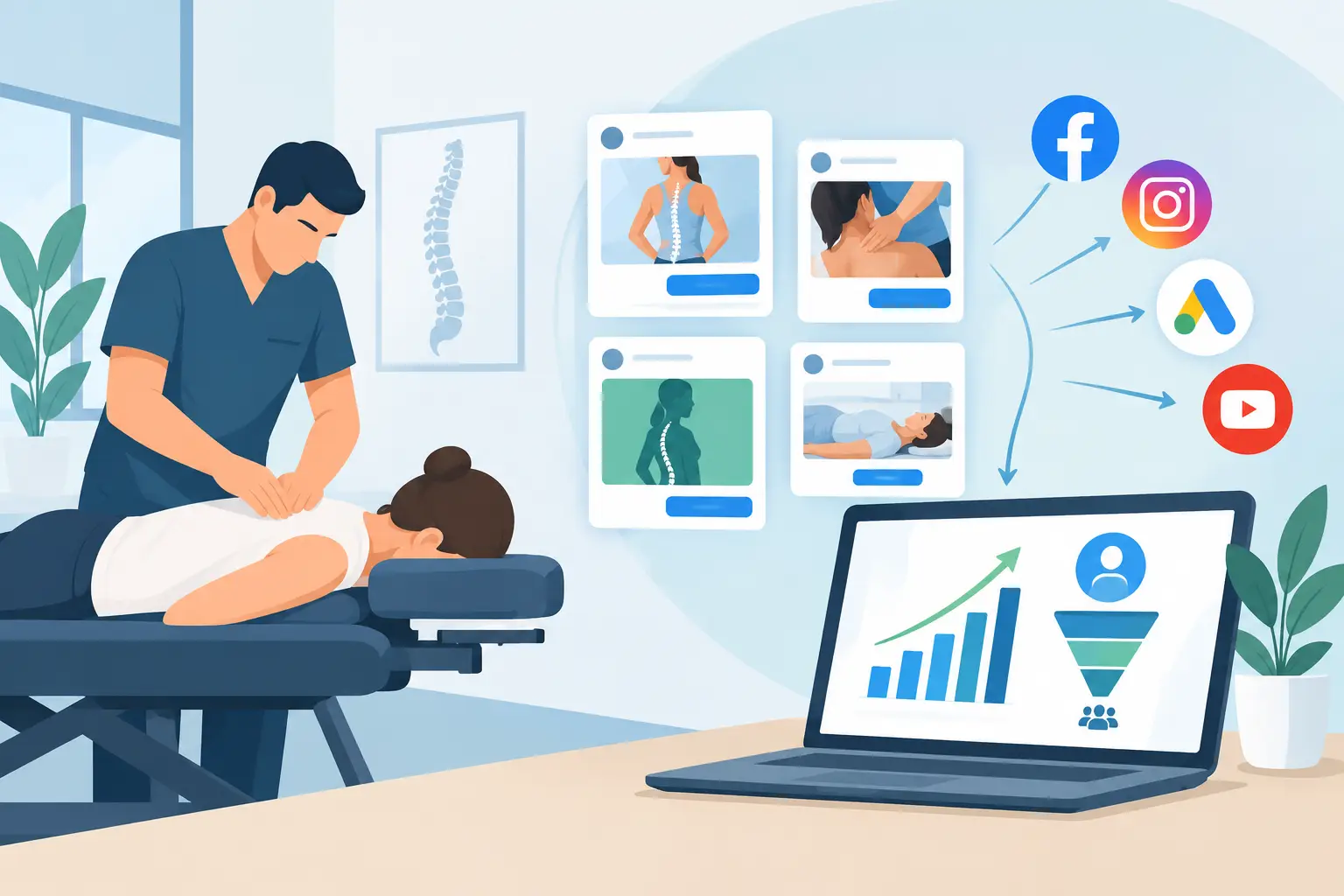
A prospective patient lands on your website at 10:47 p.m. with back pain, a stiff neck, or a recurring headache that will not let up. They are not looking for a lecture on your technique. They are deciding, in seconds, whether your practice feels credible, relevant, and easier to choose than the chiropractor down the street. That is why learning to write chiropractic website copy is a growth priority, not a minor website task.
Strong design gets attention. Strong local SEO gets your clinic found. But copy is what turns that attention into action. It gives patients a reason to trust your team, understand what makes your practice different, and book the appointment before they return to Google.
Why Most Chiropractic Website Copy Loses Leads
Most chiropractic websites sound interchangeable. They promise compassionate care, personalized treatment, and a commitment to wellness. Those ideas are not wrong. They are simply too generic to win a competitive local market.
Patients have seen the same language on dozens of healthcare websites. When every clinic claims individualized care, the claim stops functioning as a differentiator. Your website needs to answer the question patients are silently asking: Why should I choose this office over the other options I found?
The second problem is writing from the chiropractor’s point of view rather than the patient’s decision-making process. A doctor may be proud of advanced certifications, years in practice, or a specific adjusting philosophy. Those credentials matter, but they are supporting evidence. They should not come before the patient understands whether your office can help with the problem that brought them to the page.
A third leak happens when websites bury the next step. A visitor reads a page, sees a phone number in the footer, and leaves. Every important page should make the desired action obvious: schedule a new patient appointment, call the office, request availability, or claim an introductory offer where appropriate. If the path to contact is unclear, your competitors get another opportunity.
How to Write Chiropractic Website Copy That Converts
Conversion-focused copy starts with positioning. Before writing a headline, decide what your practice should be known for in your market. That could be family chiropractic, sports injury care, pregnancy care, corrective care, accident recovery, a premium patient experience, or convenient care for busy professionals.
The right position depends on your practice model, clinical focus, local competition, and the patients you want more of. A high-volume family office should not sound like a boutique performance clinic. A multi-provider practice serving a broad community should not force every page into a narrow niche. The goal is not to invent a marketing angle. It is to make your most valuable, credible difference easy to understand.
Lead With the Patient Problem
Your homepage headline should quickly connect your practice to a real patient need. Instead of opening with a vague statement about whole-body wellness, speak to the condition, outcome, or experience your ideal patient wants.
For example, a stronger message may focus on helping active adults get back to training, supporting families with consistent chiropractic care, or giving local patients a clear path forward after an auto accident. The best headline is specific enough to feel relevant but broad enough to reflect what your practice actually delivers.
Then use the next sentence to explain why your office is equipped to help. This is where you introduce your approach, your team, your experience, or the kind of care experience patients can expect. Keep it plainspoken. Patients do not need inflated clinical jargon to recognize expertise.
A useful rule is simple: lead with the reason they came, then support it with the reason they should trust you.
Make Your Difference Concrete
Saying your clinic provides exceptional care is not proof. Show patients what exceptional means in your office.
Maybe new patients receive a more thorough consultation and examination. Maybe your team offers same-day availability, digital imaging when clinically appropriate, flexible care plans, bilingual support, sports-focused rehab, or a streamlined experience for accident cases. Maybe your doctors are known locally for educating patients rather than rushing them through an appointment.
Concrete details build credibility because they are easier to picture. They also help qualify leads. A patient who wants fast access and a clear plan is more likely to convert when your website makes those strengths visible.
Do not confuse differentiation with a long feature list. The page should reinforce one central reason to choose your practice, not force a visitor to sort through every service, modality, and credential at once. Details can live deeper in the site. Your top-level message needs to be instantly clear.
Turn Services Into Patient-Focused Pages
A services page titled Chiropractic Care is rarely enough to compete in search or persuade a patient with a specific concern. Build focused pages around the services and patient needs that matter most to your practice, such as neck pain, back pain, sciatica, sports injuries, prenatal chiropractic, pediatric chiropractic, or auto accident injuries.
Each page should explain who the service is for, what symptoms or circumstances often lead someone to seek care, what the initial visit may involve, and how to take the next step. It should also set realistic expectations. Avoid guarantees, miracle language, and claims that cannot be supported.
Effective chiropractic marketing is persuasive without becoming careless. Patients respond to confident guidance, but healthcare credibility depends on accuracy. Explain your process, acknowledge that recommendations vary by patient, and use language that reflects professional judgment. This protects your reputation while making your practice feel more trustworthy.
Build Trust Before Asking for the Appointment
Many patients are not only evaluating whether chiropractic can help. They are evaluating whether they will feel comfortable in your office. Website copy should reduce that uncertainty.
Introduce the doctors as people patients can trust, but keep biographies focused on relevance. Explain what drives your care philosophy, the patient populations you serve, and what patients can expect from the team. Credentials, education, and professional experience strengthen the message when they support a patient-centered story.
Testimonials can also be powerful, especially when they speak to a recognizable patient concern or office experience. A vague statement that a clinic is great carries less weight than a patient describing how clearly the doctor explained their care plan, how welcoming the staff felt, or how easy it was to schedule.
Trust also comes from clarity. Explain insurance, payment options, first-visit procedures, and appointment logistics where appropriate. A patient who understands what happens next is more likely to act.
Write Calls to Action That Match Intent
Not every visitor is ready to book immediately. Someone searching for an emergency appointment may want to call now. Someone researching prenatal chiropractic may want to learn more before requesting an appointment. Your calls to action should match the page and the moment.
Use direct, active language: Schedule Your New Patient Visit, Call for Same-Day Availability, Request an Appointment, or Meet Our Doctors. Avoid passive buttons like Learn More when the page already contains the information a patient needs to decide.
Place calls to action throughout key pages, not only at the end. A motivated visitor should not have to scroll through your entire story to find the contact form. At the same time, do not crowd every paragraph with booking prompts. The page needs room to establish relevance and trust first.
Localize the Copy Without Sounding Forced
Your practice serves a local market, and your website should reflect that naturally. Mention your city, neighborhoods, nearby landmarks, and service areas where they make sense. Explain who you commonly serve and why patients choose your office from surrounding communities.
But do not turn every sentence into a string of city names. Search engines and patients can spot awkward location stuffing immediately. Local relevance works best when it is connected to useful information, such as parking convenience, office proximity, same-day care, or familiarity with the needs of commuters, families, athletes, or accident patients in your community.
Location pages should be useful enough to stand on their own. If you serve several areas, give each page a meaningful reason to exist. Thin, copied pages do not build authority, and they rarely create a better patient experience.
Measure What the Copy Is Producing
A website is not finished when it launches. Track calls, forms, appointment requests, page engagement, and the quality of leads coming from organic search and paid campaigns. If a high-traffic service page does not generate inquiries, the issue may be its message, page structure, call to action, or audience match.
This is where strategy matters more than subjective preference. The copy your team likes most is not always the copy that produces the most qualified new patients. Test stronger headlines, clearer offers, different calls to action, and more prominent trust signals. Small improvements across your highest-traffic pages can create a meaningful lift in booked appointments.
At MyChiroPractice, we see this repeatedly: practices do not need more generic words on a website. They need a market position, message, and conversion path built to compete for the patients they actually want.
Your website is making an argument about your practice every day, whether you intended it to or not. Make sure it gives local patients a compelling reason to stop searching, choose your clinic, and take the next step.